
For many Nigerian businesses, choosing between cloud computing and on-premise infrastructure isn’t just a technology decision—it’s a financial one. At first glance, buying your own servers may seem like a one-time investment that saves money over time. But when you consider the full picture, the costs extend far beyond the purchase price. Let’s break down what each option really costs. Understanding On-Premise Infrastructure An on-premise setup means your servers, storage, networking equipment, and software are hosted within your office or data center. Your organization is responsible for purchasing, maintaining, securing, and managing the entire infrastructure. Hidden Costs of On-Premise Infrastructure 1. Hardware InvestmentsServers, networking equipment, storage devices, UPS systems, and backup solutions require significant upfront capital. 2. Electricity and Power BackupWith Nigeria’s power challenges, businesses often depend on generators, diesel, inverters, or solar systems to keep servers running. These recurring expenses can quickly add up. 3. Maintenance and UpgradesHardware eventually becomes outdated. Regular maintenance, replacement parts, warranties, and system upgrades require both time and money. 4. SecurityProtecting physical servers from cyber threats involves investing in firewalls, antivirus software, endpoint security, backup solutions, monitoring tools, and skilled IT personnel. 5. DowntimeUnexpected hardware failures or power interruptions can bring business operations to a halt, resulting in lost productivity and revenue. 6. Limited ScalabilityExpanding your infrastructure often means purchasing new hardware, increasing storage capacity, and allocating additional office space. Understanding Cloud Infrastructure Cloud computing allows businesses to access computing resources such as servers, storage, applications, and databases over the internet. Services are typically billed based on actual usage or predictable subscription plans. Benefits of Moving to the Cloud Lower Upfront CostsInstead of investing heavily in hardware, businesses can spread costs through monthly or annual subscriptions. ScalabilityIncrease or reduce computing resources as your business grows without purchasing new hardware. Improved Business ContinuityCloud providers offer redundancy, backups, and disaster recovery capabilities that reduce the impact of outages. Enhanced SecurityLeading cloud providers invest billions annually in cybersecurity, compliance, encryption, identity management, and continuous monitoring. Remote Work EnablementEmployees can securely access business applications and files from virtually anywhere, supporting today’s hybrid work environment. Automatic UpdatesSoftware patches, security updates, and platform improvements are handled automatically, reducing administrative overhead. Comparing the Costs Factor On-Premise Cloud Initial Investment High Low Monthly Costs Variable Predictable Maintenance Business-managed Provider-managed Scalability Slow Instant Security Investment High Shared responsibility Disaster Recovery Expensive Built-in options Remote Access Complex Native support Which Option Is Best for Nigerian Businesses? There is no one-size-fits-all answer. Choose On-Premise if: Choose Cloud if: Many organizations are also adopting a hybrid cloud strategy, combining on-premise systems with cloud services to achieve flexibility while maintaining control where necessary. The Bottom Line The cheapest option isn’t always the one with the lowest purchase price. When you factor in electricity, generator fuel, maintenance, hardware replacement, security, downtime, and scalability, cloud computing often delivers a lower total cost of ownership over time—while providing greater flexibility and resilience. The best approach is to evaluate your organization’s goals, compliance requirements, existing infrastructure, and long-term growth plans before making a decision. At Velvot, we help organizations assess their IT environment, compare cloud and on-premise options, and build secure, cost-effective infrastructure that supports business growth. Ready to determine which solution is right for your business? Contact Velvot today for a cloud readiness assessment and expert guidance. Send an email to gtm@velvot.com.
Speed to Value: Building Business Apps Faster with Microsoft Power Apps
In the competitive markets of Lagos, Accra, and Nairobi, business agility isn’t just a goal it’s a survival requirement. Yet, many organizations are trapped in the “Developer Gap.” Traditional custom software projects often take 6–12 months to launch and cost millions, only to arrive with features that no longer match the current market reality. Microsoft Power Apps flips the script on software development. As a leading “low-code” platform, it empowers your team to build professional-grade applications in days or weeks, not months, by focusing on visual design rather than complex syntax. Democratizing Innovation: Apps for Everyone Power Apps allows those closest to the business problems your managers and department heads to participate in creating the solutions. By 2026, it is estimated that 75% of new enterprise applications will be built using low-code technologies. Business Outcomes: Efficiency by Design Switching to a low-code model with Power Apps changes the economics of your IT department. Strategic Goal The Power Apps Impact Faster Time-to-Value Reduce the application development lifecycle by up to 70%, allowing you to solve operational bottlenecks as soon as they appear. Lower Development Costs Slash your dependency on expensive external software firms and reduce internal IT backlogs by empowering “citizen developers.” Tailored Workflows Stop forcing your business to fit into “off-the-shelf” software. Build apps that are 100% aligned with your unique Nigerian or Ghanaian operational flows. Scaling Without Technical Debt with Velvot While Power Apps makes it easy to start, building a scalable enterprise ecosystem requires a strategic foundation. Velvot helps you navigate the “Governance Gap” ensuring your apps are secure, your data (Dataverse) is structured correctly, and your team is trained to build responsibly. We help you turn your manual spreadsheets and paper forms into a high-performance digital app portfolio that grows as you do. Ready to build your first app this week? Email: gtm@velvot.com Book a Low-Code Strategy Session: https://outlook.office.com/book/GTM1@velvot.com/s/IYknRsPItEOljj8Bs6gxBQ2
Transforming IT Support with ManageEngine ServiceDesk Plus Transforming IT Support with ManageEngine ServiceDesk Plus In the high-speed business environments of Lagos and Accra, IT departments are often viewed as “cost centers” where requests disappear into a “black hole.” When employees rely on scattered emails, phone calls, or sticky notes to report issues, productivity stalls and frustration grows. Unstructured IT requests don’t just slow down your team; they make it impossible to measure your department’s true value. ManageEngine ServiceDesk Plus transforms this chaos into a streamlined service engine. By centralizing all requests and aligning with global ITIL best practices, it allows your team to deliver high-quality support that scales with your organization—without the complexity or price tag of traditional enterprise software. From Chaos to Control: Your Unified Service Desk ServiceDesk Plus isn’t just a ticketing tool; it is a unified platform that brings your people, processes, and technology together into a single pane of glass. Centralized Ticketing Consolidate requests from email, chat, phone, and a branded self-service portal. Automatically categorize and route tickets to the right technician based on their expertise or current workload, ensuring no request is ever lost in the shuffle. Smart SLA Tracking Stop guessing whether you are meeting business expectations. Set and monitor Service Level Agreements (SLAs) with automated escalations. If a high-priority server issue is not addressed within 30 minutes, the system can automatically notify management to help prevent a major outage. Integrated Asset & License Management Gain complete visibility into your IT environment. Automatically scan your network to track laptops, servers, workstations, and software licenses. Stay ahead of renewals and maintain compliance with vendors such as Microsoft, Adobe, SAP, and other software providers. Business Outcomes: Accountability That Drives Growth Implementing a structured ITSM platform directly impacts business performance by reducing downtime, improving employee satisfaction, and increasing operational efficiency. Strategic Goal The ServiceDesk Plus Result Faster Support Reduce First Response Time through intelligent automation that handles routine requests and prioritizes critical business issues. Happier Users Empower employees with a 24/7 self-service portal and a searchable knowledge base, allowing them to resolve common issues without waiting for IT support. Better Accountability Use data-driven reporting to demonstrate IT performance, showing stakeholders how quickly issues are resolved and how IT contributes to business growth. Professional Implementation with Velvot Transitioning to a modern IT Service Management (ITSM) model requires more than software—it requires a cultural and operational shift. Velvot ensures your ServiceDesk Plus deployment is designed for the realities of West African business operations. We help organizations: Map business workflows to ITIL best practices Configure service catalogs and request workflows Implement SLAs and escalation processes Integrate ServiceDesk Plus with Active Directory and Microsoft 365 Establish reporting and performance dashboards Our goal is to transform your help desk into a strategic business function that improves service delivery and supports organizational growth. Turn Your IT Support Into Your Competitive Advantage Deliver faster support, improve employee experiences, and build an IT operation that drives measurable business value. Email: gtm@velvot.com Book an ITSM Maturity Assessment: Schedule Your Assessment
The Virtual Office: Managing Hybrid & Remote Workforces with ManageEngine
Managing and Securing the Hybrid Workforce with ManageEngine In Nigeria and Ghana, the shift to hybrid work has unlocked immense productivity and expanded the talent pool.However, it has also created a “visibility gap” for IT departments. When your team is spread across home officesand coffee shops, traditional on-premise management tools fail. IT teams often struggle to patch devices, enforce security policies, or even know if a remote laptop isperforming optimally. ManageEngine bridges this gap by providing a cloud-native, unified approach to remote management.Whether your employees are in Lagos, Accra, or working from a remote village, ManageEngine ensures that theirdevices are secure, their connections are fast, and their productivity remains unbroken. Complete Control Beyond the Office Walls ManageEngine’s remote workforce solutions led by Endpoint Central andRemote Access Plus ensure that distance is never a barrier to effective IT management. Secure Endpoint Management (UEM) Manage desktops, laptops, and mobile devices from a single pane of glass. You can deploy software,automate operating system patching, and manage mobile applications (MAM) over the air without requiring a VPN. If a device is lost or stolen, you can remotely lock or wipe it to protect company data and maintain compliance. Intelligent Policy Enforcement Ensure every remote device follows your security “rules of the road.” Automatically enforce BitLocker encryption,firewall configurations, and USB device restrictions. By applying Zero Trust principles, organizations can verify device health and compliance before granting accessto sensitive applications and business resources. Remote Performance & Digital Experience Monitoring Don’t wait for employees to report that their laptops are slow. ManageEngine continuously monitors CPU,memory, and disk performance in real time. With Remote Access Plus, IT teams can troubleshoot issues in the background without interrupting the user’s work,or leverage built-in voice and video communication tools to guide employees through resolutions when needed. Business Outcome: Security Meets Productivity A well-managed hybrid workforce becomes a competitive advantage, helping organizations reduce operational costswhile maintaining employee engagement and productivity. Strategic Advantage The ManageEngine Hybrid Result Secure Access from Anywhere Empower employees to work securely on home, public, or mobile networks with hardened devicesand protected connections. Uninterrupted Visibility Gain a complete 360-degree view of your IT environment, including hardware inventory,software utilization, and compliance status in real time. Reduced IT Overhead Minimize the need for physical support visits. Up to 90% of remote issues can be resolvedthrough integrated remote control and automated self-service capabilities. Seamless Deployment with Velvot Managing a borderless workforce requires a strategy that accounts for local challenges such as fluctuatinginternet bandwidth and diverse device types. Velvot ensures your ManageEngine deployment is optimized for the West African operating environment.We help organizations implement bandwidth-aware patching, configure secure remote access channels,and establish management processes that keep IT operations running efficiently. Beyond deployment, our team provides ongoing support and optimization to help your IT department stay aheadof evolving business and security requirements. Bring Your Team Together, No Matter Where They Are Empower your workforce with secure, reliable, and centrally managed IT operations that support productivityfrom anywhere. Email:gtm@velvot.com Schedule a Hybrid Work Security Audit:Book Your Audit
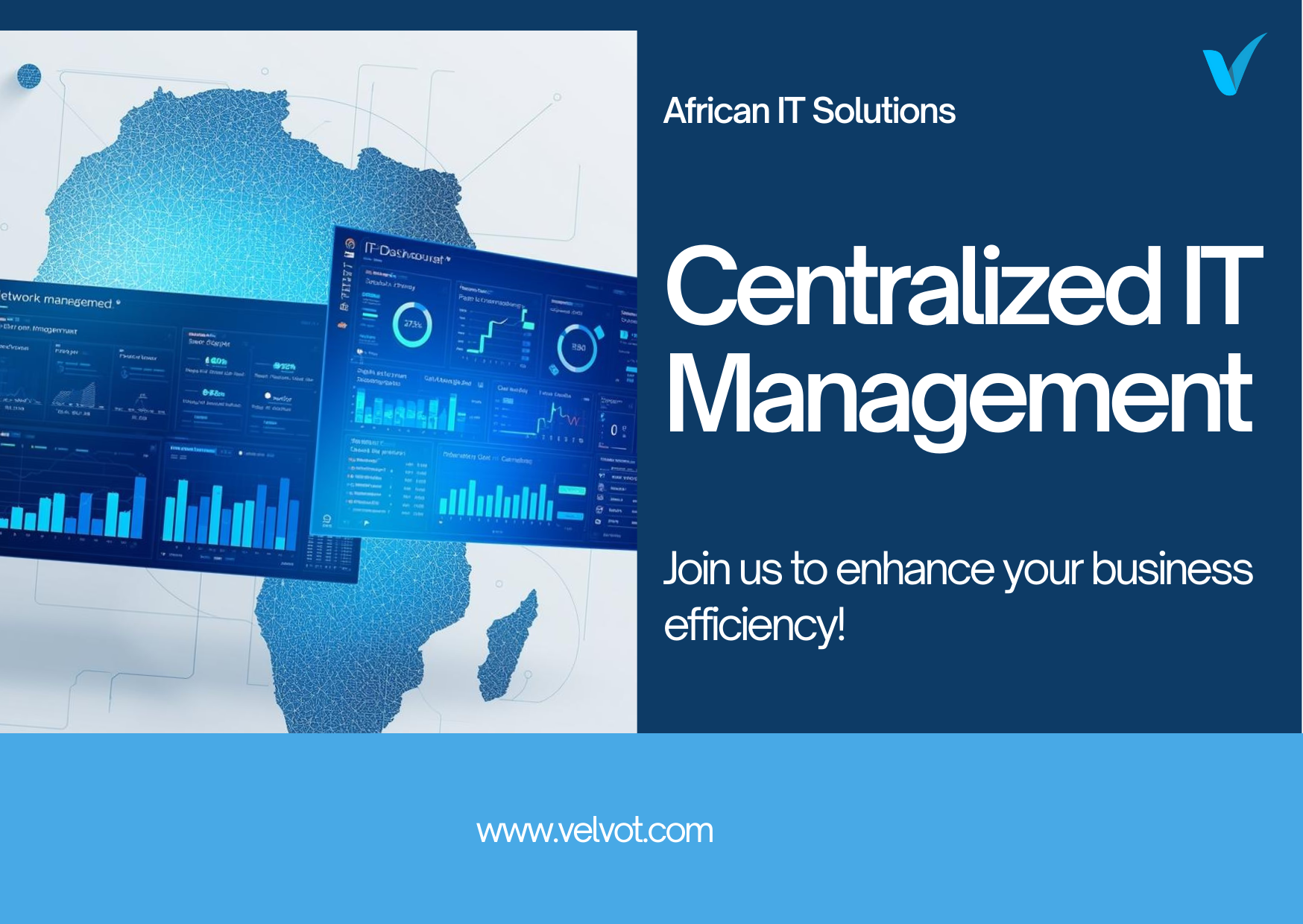
Centralized IT Management for Growing African Businesses
The Growth Problem No One Warns You About Many Nigerian and Ghanaian businesses celebrate growth — new offices, more staff, more systems.But quietly, behind the scenes, IT starts to break. Devices are unmanaged, users multiply,security policies become inconsistent, and IT teams spend their days firefighting instead of innovating. Here’s the uncomfortable truth: growth without centralized IT management creates risk, waste,and downtime. While competitors gain visibility and control, many organizations are stillchasing issues across emails, spreadsheets, and disconnected tools. This is where ManageEngine becomes a strategic advantage. Why Decentralized IT Is Hurting Your Business As businesses expand across locations in Nigeria and Ghana, IT environments become fragmented: Multiple devices with no unified policy No real-time view of servers and networks Security gaps caused by inconsistent controls IT teams overwhelmed by manual tasks These challenges don’t just affect IT — they slow decision-making, disrupt operations,and expose the business to compliance and security risks. What Centralized IT Management with ManageEngine Delivers ManageEngine provides a single-pane-of-glass approach to managing users, devices,servers, applications, and networks. With ManageEngine, organizations gain: Central visibility across IT assets Unified user and access management Proactive monitoring and alerts Automated IT operations Built-in compliance and reporting This is not about adding complexity — it’s about simplifying control. Industries Seeing Immediate Value Financial Services & Fintech Secure user access Compliance-friendly reporting Reduced operational risk Healthcare & Education Centralized device and user management Improved system uptime Better data protection Manufacturing, Logistics & Retail Monitoring across multiple sites Reduced downtime Faster issue resolution The Business Benefits Executives Care About Operational Efficiency: Less downtime, fewer manual tasks Security: Stronger controls without enterprise-level cost Scalability: IT that grows with the business Cost Optimization: Better use of IT resources The result? IT shifts from a cost center to a growth enabler. The Hidden Cost of Delaying Centralized IT Many organizations wait until systems fail or audits expose gaps before acting.By then, remediation is expensive and disruptive. Businesses that adopt centralized IT early gain speed, resilience, and competitive advantage.Those that delay are forced into reactive decisions. How Velvot Helps Organizations Succeed with ManageEngine Velvot is a trusted IT solutions partner supporting businesses across Nigeria and Ghana. We help you: Assess your IT environment Design the right ManageEngine architecture Handle licensing and deployment Customize solutions to your operations Provide ongoing monitoring, support, and optimization Our goal is simple: give you visibility, control, and peace of mind. Take the Next Step with Confidence If your business is growing but your IT visibility is shrinking, it’s time to act. Email:gtm@velvot.com Book a Consultation:Schedule a Meeting
Meeting Momentum: Improving Collaboration with Copilot in Microsoft Teams
Transform Meetings into Action with Microsoft Copilot in Teams In the fast-paced corporate cultures of Lagos and Accra, meetings are essential but often exhausting. “Meeting fatigue” is a real productivity killer—teams spend hours in calls, only to leave with vague notes and unclear next steps. When key decisions aren’t documented, projects stall, and the same topics are revisited in the next meeting, creating a cycle of inefficiency. Microsoft Copilot in Teams acts as a high-performance executive assistant for every participant. It doesn’t just record the call; it understands the conversation, ensuring that every minute spent in a meeting translates into direct business action. Capturing the Value of Every Conversation Copilot works in real-time and post-meeting to ensure nothing is lost in translation. Instant Meeting Summaries If you join a meeting ten minutes late, you don’t have to interrupt the flow. Simply ask Copilot: “What has been discussed so far?” Copilot provides a concise summary of the key points, decisions made, and even the sentiment of the room, helping you catch up instantly. Automated Action Items During the discussion, Copilot identifies commitments as they happen. At the end of the call, it generates a structured list of tasks, identifying exactly who agreed to do what and by when. These action items can be instantly synchronized with Microsoft Planner or Microsoft To Do, ensuring accountability and follow-through. Clear Follow-Ups & Recaps After the meeting, the Recap tab becomes your single source of truth. Copilot organizes the transcript into chapters and highlights, allowing users to jump directly to the parts of the meeting where their department was mentioned or where specific decisions and approvals were made. Business Outcomes: Execution at the Speed of Sight By automating the administrative aftermath of meetings, Copilot enables teams to stay focused on high-value execution and strategic priorities. Strategic Need The Copilot Teams Impact Less Meeting Fatigue Reduce the need for follow-up meetings to discuss the previous meeting. Clear summaries help everyone stay aligned from the start. Better Execution Eliminate the “I forgot that was my task” excuse. Automated action items create immediate accountability and provide a clear roadmap for execution. Inclusive Collaboration Ensure remote and hybrid employees—or team members dealing with network interruptions—remain synchronized through real-time captions, transcripts, and recaps. Maximize Your Meeting ROI with Velvot A tool is only as good as its implementation. Velvot helps organizations integrate Microsoft Copilot into their Teams environment with a strong focus on governance, compliance, and user adoption. We ensure your meeting policies—including transcription and recording settings—are configured to align with organizational policies and local data regulations. We also train employees on effective prompt engineering techniques to help them generate more accurate summaries, insights, and action items from every meeting. Stop Just “Having” Meetings. Start Driving Results. Every meeting should move your business forward. With Microsoft Copilot in Teams, conversations become decisions, decisions become actions, and actions become measurable outcomes. 📧 Email: gtm@velvot.com
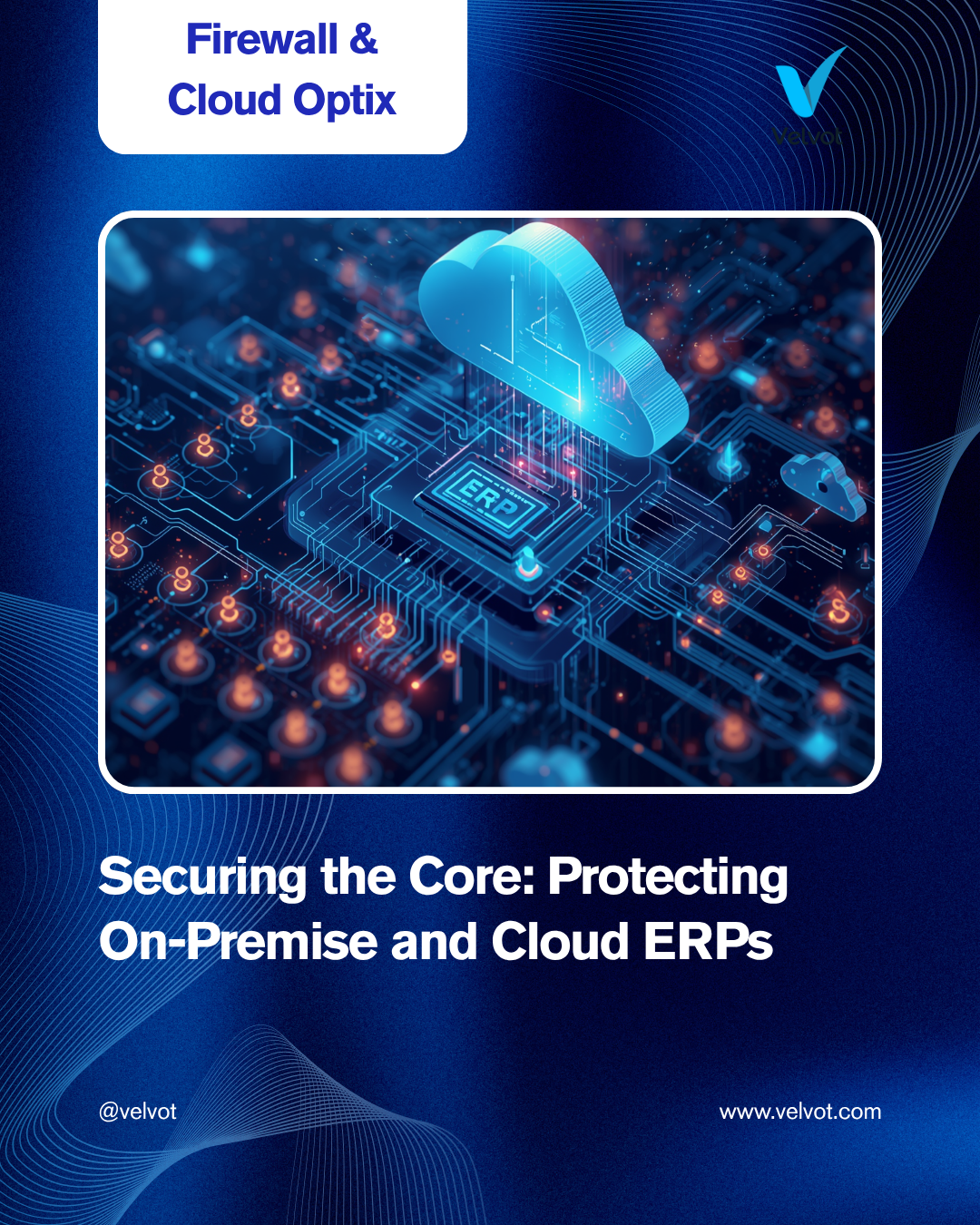
Securing the Core: Protecting On-Premise and Cloud ERPs
Securing the Core: Protecting On-Premise and Cloud ERPs Your Enterprise Resource Planning (ERP) system is the heartbeat of your organization. It houses your financial records, proprietary supply chain data, and sensitive HR information. Whether your ERP sits on a physical server in your office or is hosted in the cloud (Azure, AWS, or private data centers), it is the ultimate “gold mine” for cybercriminals. In the 2026 threat landscape, a simple firewall at the edge of your network is no longer enough to protect this core asset. The New Reality of Lateral Movement Modern cyberattacks rarely hit the ERP directly from the outside. Instead, they find a weak point—a remote worker’s laptop or a vulnerable IoT device—and then move laterally through your network. If your on-premise and cloud infrastructures are not properly segmented, once a hacker gains a foothold, they have a straight path to your ERP. Relying on basic ISP security or default cloud configurations leaves your most valuable data exposed to AI-powered ransomware that can encrypt your entire database in minutes. The Sophos Solution: Firewall & Cloud Optix To protect your ERP, you need a defense that is both deep and wide. Sophos provides a unified security posture that covers every inch of your infrastructure. Sophos Firewall (XGS Series) For on-premise or hybrid setups, the Sophos Firewall uses “Synchronized Security” to talk directly to your endpoints. If a workstation shows signs of infection, the firewall automatically isolates it, preventing the threat from ever reaching your ERP server. Sophos Cloud Optix If your ERP is in the cloud, Cloud Optix acts as your AI-powered radar. It scans your cloud environment (AWS, Azure, Google Cloud) to identify misconfigurations, over-privileged users, and “back doors” that could lead to a data breach. The Velvot CyberPro Edge Securing an ERP requires a delicate balance: it must be locked down tight, but it must remain accessible to the people who need it. Velvot CyberPro, the dedicated security team from the Velvot Group, specializes in securing complex hybrid environments. Network Segmentation: We build “digital vaults” around your ERP to prevent lateral movement. Hybrid Bridge Security: We create secure, encrypted tunnels between your on-premise offices and your cloud infrastructure. Compliance Alignment: We ensure your Sophos configuration meets industry standards for data protection and privacy. Your Data is Your Most Valuable Asset. Protect It. An attack on your ERP isn’t just an IT problem; it’s a business-stopping event. Don’t leave your infrastructure’s core to chance or basic ISP-grade security. Partner with Velvot CyberPro to build a modern, AI-powered defense around your ERP. Book an Infrastructure Security Audit
Beyond the Perimeter: Why Zero Trust is the New Standard
Beyond the Perimeter: Why Zero Trust is the New Standard The traditional office “perimeter” has dissolved. With teams working from home, coffee shops, and international transit hubs, the old method of securing a network—building a tall wall around the office and trusting everyone inside—is officially obsolete. If you are still relying on a traditional VPN to give remote workers access to your ERP or internal files, you aren’t just providing access; you are creating a massive security blind spot. The Danger of “Implicit Trust” In a traditional network setup, once a user or device is “inside” via a VPN, they are often granted broad access to the entire network. This is known as implicit trust. Modern attackers thrive on this. If a remote worker’s credentials are stolen, or their home laptop is compromised, an attacker can use that VPN connection to move laterally across your entire infrastructure. They can hop from a simple file share to your sensitive on-premise ERP or your cloud-hosted database. To make matters worse, many businesses rely on local ISP security to vet these connections. But as attacks become more sophisticated, they easily bypass basic ISP filters, leaving your internal assets exposed. The Sophos Solution: Sophos ZTNA The shift from “trust but verify” to “never trust, always verify” is the foundation of Zero Trust Network Access (ZTNA). Sophos ZTNA replaces the clunky, insecure VPN with a transparent, identity-aware security model. Why Sophos ZTNA is a Game Changer: Micro-Segmentation: Users are only granted access to the specific applications they need to do their job—nothing more. If an employee only needs the ERP, they can’t even “see” the rest of the network. Constant Verification: Sophos constantly checks the health of the device and the identity of the user. If a device becomes infected or a login looks suspicious, access is revoked instantly. Synchronized Security: ZTNA works in tandem with your Sophos endpoint protection. If a laptop detects malware, the ZTNA gateway is notified immediately and isolates that user from your work apps. Cloud & On-Premise Protection: Whether your infrastructure is sitting in your server room or hosted on Azure or AWS, Sophos ZTNA provides a single, secure gateway for all your remote talent. The Velvot CyberPro Edge Implementing a Zero Trust architecture isn’t just about flipping a switch—it requires a deep understanding of your business workflows and application dependencies. Velvot CyberPro, the dedicated security experts from the Velvot Group, specializes in high-precision ZTNA deployments. We don’t just secure your network; we optimize your remote work experience. By partnering with us, you get: Application Mapping: We help you identify exactly which users need access to which apps, ensuring a smooth transition without productivity loss. Hybrid Infrastructure Support: Our team bridges the gap between your legacy on-premise systems and your modern cloud apps. Continuous Management: We monitor your ZTNA environment 24/7, adjusting policies as your team grows and threats evolve. Secure Your Remote Workforce Today The “perimeter” is gone, but your security doesn’t have to be. It’s time to move beyond the VPN and embrace a security model built for the world of 2026. Don’t leave your infrastructure vulnerable to lateral attacks. Transition to a Zero Trust environment with the combined power of Sophos and Velvot CyberPro. Book a Consultation with Velvot CyberPro

The AI Arms Race: Why Your Legacy Security is Failing
The AI Arms Race: Why Your Legacy Security is Failing In the traditional imagination, a cyberattack involves a lone hacker in a dark room manually typing commands to break into a server. In 2026, that image is obsolete. Today, you aren’t just fighting humans; you are fighting adversarial AI. Hackers are now leveraging large language models and automated machine learning to launch attacks at a scale and sophistication previously unimaginable. If your organization is still relying on legacy security, you are essentially bringing vintage weapons to a modern, high-tech war. The Shift in the Security Landscape The “old way” of doing things—relying on signature-based antivirus and basic ISP filtering—is no longer a viable defense. Here is why the landscape has become so treacherous: AI-Powered Phishing: Attackers use AI to craft perfectly written, context-aware emails that bypass traditional spam filters and trick even the most cautious employees. Polymorphic Malware: Modern threats can change their code as they spread, meaning they don’t have a static “signature” for old-school antivirus to recognize. The “ISP Shield” Myth: Many business owners believe their local Internet Service Provider (ISP) provides sufficient security. In reality, an ISP provides a pipe, not a shield. They are designed to move data, not to inspect it for the sophisticated, multi-stage attacks that define today’s threat environment. The Sophos Solution: Intelligence That Evolves To defeat AI-driven threats, you need AI-driven defense. This is where Sophos Intercept X changes the game. Unlike traditional security that waits for a virus to be identified and added to a database, Sophos Intercept X features a Deep Learning Neural Network. This advanced AI is trained on hundreds of millions of samples to identify the DNA of malicious code. Why it works: Proactive vs. Reactive: It identifies and blocks malware even if it has never been seen before in the wild. Anti-Exploit Technology: It stops the techniques used in 90% of all ransomware attacks, rather than just looking for specific files. Root Cause Analysis: If a threat is detected, Sophos doesn’t just delete it; it shows you exactly where it came from and what it tried to touch, allowing for total remediation. The Velvot CyberPro Edge Deploying world-class AI security like Sophos requires more than just “installing and forgetting.” It requires the precision of a dedicated security team. Velvot CyberPro, the elite cybersecurity arm of the Velvot Group, acts as your strategic partner. We ensure that your Sophos environment isn’t just running, but is optimized for your unique business logic. By partnering with us, you benefit from: Custom Tuning: We eliminate the “noise” of false positives while ensuring a 99.9% catch rate for genuine threats. Seamless Integration: Whether your ERP is on-premise or in the cloud, we ensure your security layers talk to each other. 24/7 Vigilance: We bridge the gap between sophisticated software and human expertise, providing the oversight needed to catch what automation might miss. Is Your Business Ready for an AI-Driven Attack? The question is no longer if you will be targeted, but when. Relying on outdated legacy systems or basic ISP protection is a gamble where the stakes are your entire business operation. Don’t wait for a breach to realize your defenses are obsolete. Secure your future with the combined power of Sophos Intelligence and Velvot CyberPro expertise. Book a Vulnerability Assessment with Velvot CyberPro Today
Sophos Resolves Critical Vulnerability in AP6 Series Wireless Access Points
Sophos Resolves Critical Vulnerability in AP6 Wireless Access Points: Urgent Firmware Update Recommended Sophos has released a crucial security update to address a critical authentication bypass vulnerability impacting its Sophos AP6 Series Wireless Access Points. This zero-day flaw, identified internally by Sophos’s own security team, could allow an attacker to gain full administrator-level privileges, posing a significant risk to network security. This proactive discovery and rapid resolution underscore Sophos’s commitment to protecting its customers. The company urges all administrators to ensure their Wireless Access Points are running the latest firmware update to mitigate this serious threat. What Was the Sophos AP6 Vulnerability? The vulnerability (an authentication bypass flaw) allowed an attacker with network access to the management IP address of the access point to bypass standard authentication protocols. Once exploited, this could grant elevated privileges, giving the attacker complete control over the device. A successful exploit of this Sophos AP6 vulnerability could lead to: Complete takeover of the access point. Interception and manipulation of sensitive network traffic. Disruption of wireless connectivity for all users. Using the compromised AP6 device as a foothold for launching further attacks within the internal network. Fortunately, the primary risk is from attackers already on the local network, as exploiting the flaw requires direct access to the management interface. Affected Devices and the Crucial Firmware Update This vulnerability affects Sophos AP6 Series Wireless Access Points running firmware versions older than 1.7.2563 (MR7). Sophos has patched this flaw in firmware version 1.7.2563 (MR7), which became available on August 11, 2025. This firmware update is essential for maintaining robust network security. Urgent Action for Administrators For most customers, this firmware update has already been applied automatically. Sophos AP6 devices are configured to install updates by default, ensuring a seamless and proactive defense against new threats. However, if your organization has disabled automatic updates, immediate action is required: 1. Verify Firmware Version: Log in to your Sophos management console and confirm that your AP6 Wireless Access Points are running firmware 1.7.2563 (MR7) or newer. 2. Manual Update: If your devices are running an older version, you must manually initiate the firmware update to protect your network. Failing to update your Sophos AP6 devices leaves them vulnerable to this critical authentication bypass risk. Sophos’s Proactive Security Approach The internal discovery of this flaw highlights Sophos’s powerful and proactive security testing. By identifying and patching vulnerabilities before they are exploited in the wild, Sophos demonstrates its commitment to staying ahead of cybercriminals and reinforcing customer trust. Action Required: All organizations using Sophos AP6 products must confirm that their devices have been updated to the latest firmware. Keeping your Wireless Access Points current is a fundamental step in safeguarding your business operations and data against a constantly evolving threat landscape.